
01
Start with the plan
A feature may look as though it belongs to one apartment but still be common property. Roofs, foundations, external walls, shared pipes, driveways and structural elements are common examples. Services that exclusively serve one unit may be treated differently from infrastructure serving several lots.
In South Australian strata schemes, common property is generally land or space outside a unit, subject to the plan and special rules for structures and services. Community schemes and community strata schemes use different boundary concepts, so the title type must be identified first.
02
Separate three questions
First: who owns or controls the item? Second: who has the legal duty to maintain, repair or replace it? Third: how is the cost shared? These answers often align, but not always. A valid exclusive-use arrangement or registered rule may give one owner special rights and maintenance obligations over part of the common property.
Benefit alone does not automatically establish liability. Nor should a committee allocate cost through an informal decision if the Act, entitlements or registered rules require another method.
03
A defensible repair workflow
- 01
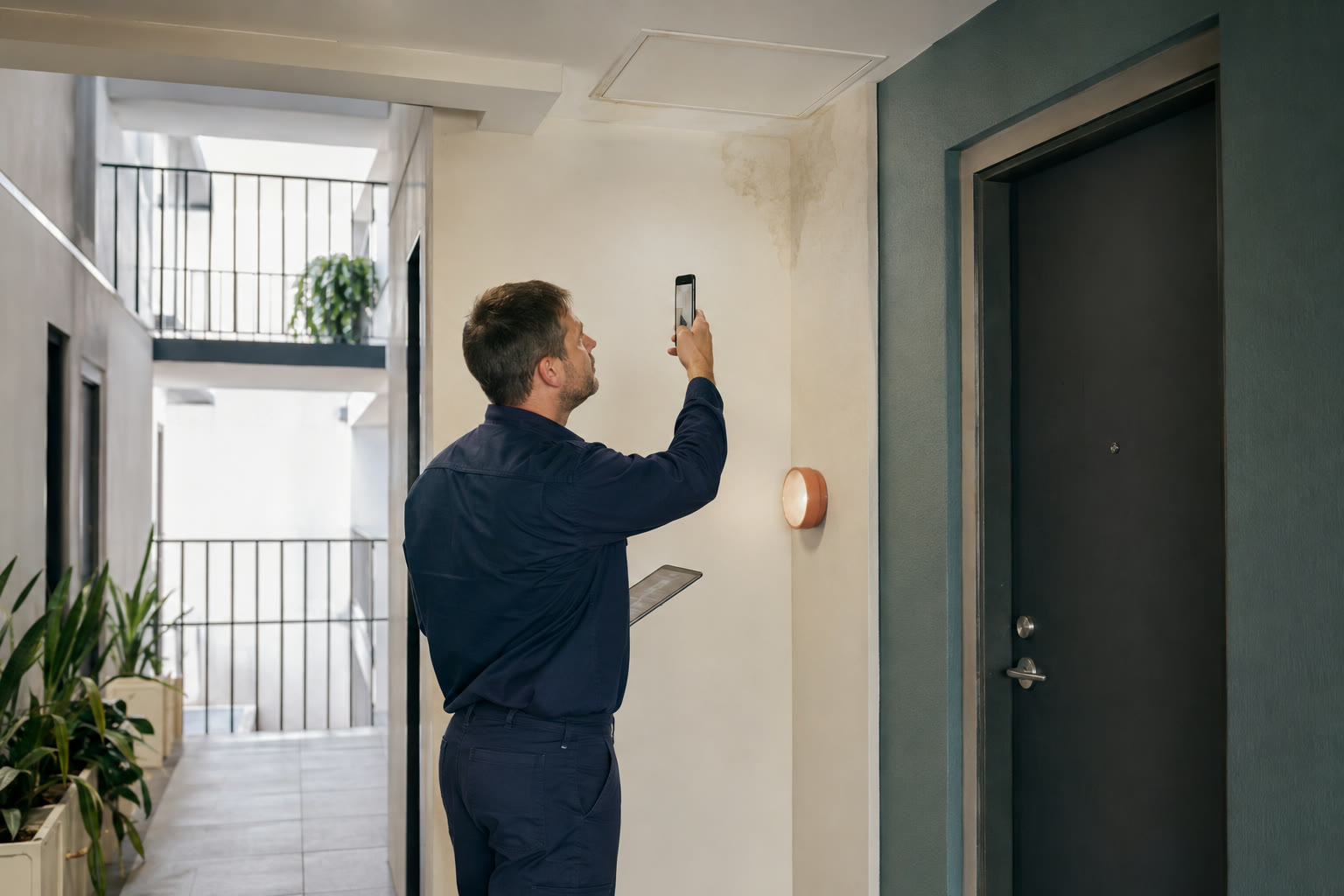
Record the defect and immediate safety risk.
- 02
Obtain the plan and relevant rule.
- 03
Identify whether the item exclusively serves one lot or several.
- 04
Check previous approvals, warranties and insurance.
- 05
Seek a technical report where the cause crosses boundaries.
- 06
Obtain quotes against a clear scope.
- 07
Have the authorised decision-maker approve the work and funding.
- 08
Keep completion evidence and warranties with the property record.
Urgent work may require faster action, but urgency should not erase the record. Document the reason, authority, cost and later ratification required.
04
Avoid the most common mistakes
Do not assume the inside/outside distinction answers every question. Do not rely on an old committee custom that conflicts with the plan. Do not authorise alterations to common property without the required approval. Do not promise an owner reimbursement before responsibility and authority are confirmed.
When ownership, causation or cost allocation is disputed, obtain legal or surveying advice before making irreversible changes or commencing recovery action.
Sources